
Dry Stone Wall Repairs Gloucestershire: Key Warning Signs

Why Cotswold Dry Stone Walls Fail (and Why It Matters Now)
Dry stone walls are one of the most recognisable features of Gloucestershire and the wider Cotswolds, but they are also quietly working structures that take weather, ground movement, and everyday knocks year after year. When a wall starts to fail, it rarely happens all at once. It usually begins with small, easy-to-miss changes that, left alone, develop into avoidable collapse and higher repair costs.
What makes Gloucestershire walls unique
Gloucestershire walls are typically built from local Cotswold limestone, laid without mortar, with stability coming from careful stone selection, good “batter” (the slight inward lean), and a well-packed core. Because these walls are built to breathe and move slightly, the craftsmanship matters more than most people realise. The local landscape context is also part of the story, and Dry stone walls are recognised as a defining feature that supports both heritage character and habitat value.
Why small movement turns into collapse
A dry stone wall can tolerate minor settlement, but once stones start to shift out of their proper bedding, the load path changes and the face begins to open. I’ve found that bulges and slight leans often start around weak points—poorly packed hearting, missing through-stones, or areas repeatedly clipped by mowers and vehicles. Over time, the wall loses friction between stones, and one season of frost or heavy rain can be enough to push it from “a bit tired” to structurally unsafe.
The cost of leaving it another season
Delaying dry stone wall repairs tends to increase both scope and disruption. What could have been a localised rebuild can become a longer run of wall that needs taking down and rebuilding properly, particularly if the core has washed out or vegetation has taken hold. If the wall forms a boundary, there is also a practical risk: stock control, pet safety, and liability around public footpaths or roadside edges. In many Gloucestershire properties, the wall is also part of the setting of a period home, so visible failure can affect kerb appeal as well as function.
The Most Common Causes of Dry Stone Wall Damage Locally
Across Cheltenham, Stroud, Tetbury, Cirencester and the surrounding villages, the reasons for failure are surprisingly consistent. The difference is usually the combination—water plus frost, roots plus settlement, or a small impact that exposes an existing weakness. When clients ask about repairing dry stone walls, I usually start by looking for the “driver” of movement, not just the section that has already fallen.
Water, frost and freeze–thaw cycles
Water is the silent force behind a lot of dry stone wall repairs in Gloucestershire, especially where ground drains poorly or the wall sits at the toe of a slope. Moisture gets into joints and voids, then expands during frost, slowly prising stones apart and loosening the hearting. If you want a clear step-by-step overview of common repair thinking, A Practical Guide to Dry Stone is a helpful reference for homeowners trying to understand what “good practice” looks like.
Vegetation, roots and buried organic matter
Vegetation can look charming on a boundary wall, but roots behave like wedges, and ivy can pull stones as it thickens and catches the wind. In my experience, the bigger issue is often buried organic matter—old hedge roots, leaf build-up, or soil washing into the core—which rots down and leaves voids. Once voids form, the wall becomes more vulnerable to settling and face stones working loose under their own weight.
Ground movement, livestock pressure and vehicle impact
Seasonal ground movement is common in rural Gloucestershire, particularly where clay content is higher or where old drains and land contours concentrate water. Add livestock rubbing, hoof pressure near gateways, or the occasional clip from a tractor or delivery vehicle, and a wall can start to open quickly. Even a small impact can matter if it dislodges a key stone, because dry stone structures rely on continuous interlock rather than any single “fixing” point.
Early Warning Signs You Can Spot on a Walk-Through
You do not need to be a stonemason to spot early problems, but you do need to know what you are looking for. A quick walk along your boundary every few months—especially after heavy rain or frost—can help you catch issues while dry stone wall repairs are still straightforward. I recommend checking the wall from both sides, because what looks acceptable from a distance can reveal clear movement when viewed end-on.
Bulging, leaning and loss of line
Bulging is one of the most reliable early indicators: the face starts to belly outward, often at mid-height, and the top line loses its crisp, straight run. Leaning can be subtle; you may only notice it when you look along the wall length rather than at it head-on. If the wall no longer has an even batter, it is typically telling you that the core packing has loosened or the foundation has settled unevenly.
Loose coping stones and missing hearting
Coping stones should feel stable and seated, not rocking under light pressure, and they should form a consistent finish that helps shed water. When coping loosens, it often means the layers beneath have shifted or the hearting has washed out, leaving gaps that reduce friction and lock-up. For homeowners wanting to understand the anatomy of a well-built wall, Learn how to build a dry provides a useful visual explanation of core elements like hearting and through-stones.
Gaps, daylight-throughs and stone movement
Small gaps are normal in dry stone construction, but “daylight-throughs” that are widening or appearing in clusters are a sign that stones are migrating out of position. If you can see fresh, clean faces where a stone has shifted, or you find repeated small stones at the base, the wall is actively shedding material. That is usually the moment to plan dry stone wall repairs, because waiting often means the disturbed area spreads beyond the original weak spot.
Red-Flag Symptoms That Need Prompt Attention
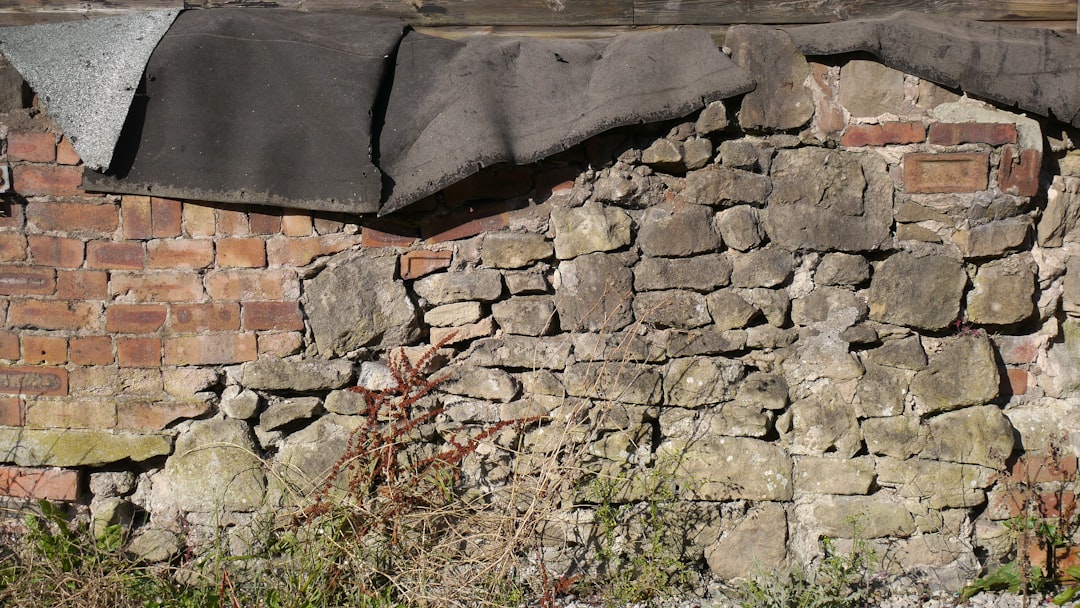
Some symptoms go beyond routine maintenance and move into the category of urgent attention—particularly where the wall borders a road, footpath, driveway, or any area used regularly by family, tenants, or the public. Prompt repairs are not just about appearance; they are about preventing sudden collapse and reducing the amount of wall that has to be taken down to achieve a sound result.
Sections dropping after heavy rain
If a section looks lower than it did a week ago, or the top line suddenly dips after heavy rain, the core may have softened and shifted. Water can lubricate fine soil within the wall, allowing stones to slide and settle, and that change can be rapid. In Gloucestershire, a wet spell followed by cold nights can accelerate this process, which is why reactive dry stone wall repairs often follow a period of storms.
Repeated stone falls in the same area
When stones repeatedly fall from the same stretch, it is rarely “bad luck”; it usually indicates a structural weakness that is not being addressed by simply putting stones back. Each small loss reduces interlock, which makes the next fall more likely and often larger. Research into the broader value and management of these structures, including habitats and landscape function, is explored in Developing an ecosystems approach –dry stone, which underlines why keeping walls in good order matters beyond one property line.
Near-gateways and corners failing first
Gateways, corners, and changes in level are classic failure points because forces concentrate there—foot traffic, livestock pressure, vehicle wash, and the small impacts that happen during daily use. Corners also need careful tying and through-stones to prevent separation, so a weakness shows sooner. If a corner starts to open or a gate pier leans, it is typically more cost-effective to address it promptly than to wait until the failure travels along the run.
Repair or Rebuild? How to Tell What Your Wall Really Needs
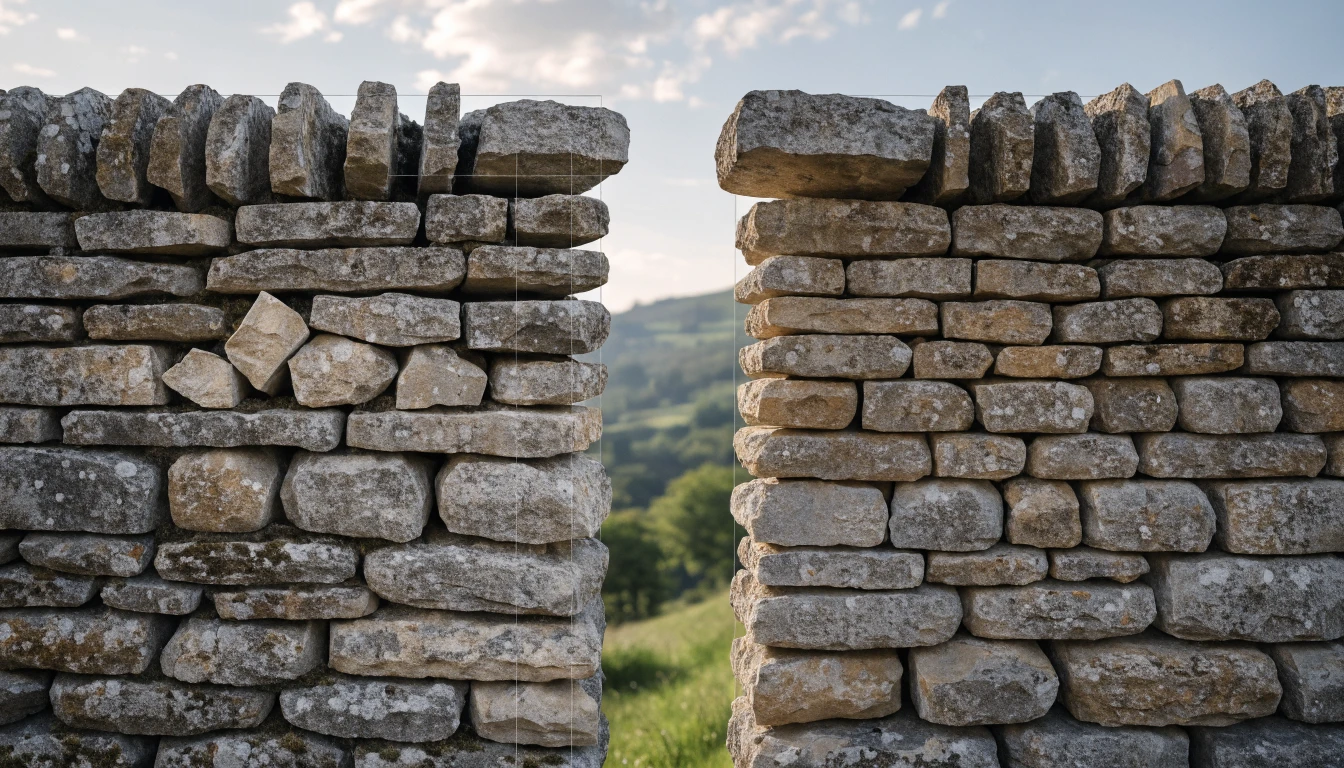
One of the most common questions I hear is whether a wall needs a simple repair or a full rebuild. The honest answer is that it depends on what has moved, why it moved, and how much of the wall’s internal structure is still doing its job. Good dry stone wall repairs should be proportionate: fix enough to restore long-term stability, but avoid unnecessary disturbance when the surrounding wall is still sound.
When stitching-in and localised repairs work
Localised repair works well when the wall has a defined damaged section—often from impact, a small slump, or missing stones—while adjacent areas remain tight and true. In these cases, a skilled dry stone waller can take down the affected length to solid “shoulders,” rebuild the core properly, and tie it back into the existing wall. This approach preserves the original fabric and is often the right fit for homeowners managing budgets without compromising structural quality.
When foundations and core structure are compromised
Rebuild becomes the sensible option when the foundation has settled broadly, the wall has lost its batter along a longer run, or the core has turned to loose rubble and soil. If the face has been re-stacked repeatedly without re-packing hearting or reinstating through-stones, the wall may look temporarily upright but behave like a stack of loose blocks. This is where professional assessment matters, and for local context on choosing the right expertise, Why Hire a Dry Stone Waller is a useful starting point.
How access, wall height and stone supply affect the decision
Practicalities influence cost and method more than most people expect: tight access can slow down safe handling, and taller walls demand more careful building and temporary stability management. Stone supply also matters—if many original stones are missing, matching local Cotswold limestone becomes part of the scope, not an afterthought. For dry stone wall repairs in the Cotswolds, the best results come from planning the method around what is available on site and what will blend visually with the surrounding boundary.
What a Proper Repair Looks Like (Not Just ‘Putting Stones Back’)
It is completely understandable that people try to “tidy up” a fallen area by stacking stones back into place. The problem is that a dry stone wall is not a pile of rocks; it is a layered structure where each stone has a job. Proper dry stone wall repairs restore the internal architecture of the wall, so the repaired section performs like the original—stable, well-drained, and able to tolerate seasonal movement.
Rebuilding the face and packing the core correctly
A proper repair starts by carefully taking down the failed section to a stable end point and sorting stone by size and suitability. The faces are rebuilt with well-bedded stones laid into the wall, while the core is packed firmly with hearting to remove voids and stop movement. If hearting is loose or missing, the face stones have nothing solid to lock against, which is why “quick stacking” rarely lasts through winter.
Reinstating through-stones and good bonding
Through-stones—longer stones that tie the two faces together—are a key feature in many Cotswold walls, especially at intervals and around stress points. A repair that ignores through-stones can look fine for a few months, then begin to separate as the faces behave like two independent skins. Good bonding also means staggering vertical joints and keeping stones laid on their natural bed, which improves stability without needing any mortar.
Finishing with stable, weatherproof coping
Coping is not just decoration; it is the roof of the wall, helping shed water and adding weight to lock the top courses. A proper finish uses coping stones that sit securely, are balanced along the line, and suit the local style—often upright or slightly angled coping in this part of the world. When coping is stable, it reduces water ingress and slows frost damage, which is a practical way to extend the lifespan of dry stone wall repairs.
Why Using a Professional Dry Stone Waller Protects Your Investment
Dry stone walls sit at the intersection of structure, landscape, and heritage. That means poor workmanship is not just an aesthetic issue—it can create repeat failures and ongoing maintenance costs. Choosing a professional dry stone waller is usually less about “paying for labour” and more about paying for judgement: knowing what to dismantle, what to keep, and how to rebuild in a way that fits the site and the stone.
Safety, stability and preventing repeat failures
A wall that is leaning or shedding stones can present real safety risks, especially near driveways, footpaths, and garden areas used by children or visitors. A professional will assess stability and sequence the work so the wall is not left in a weakened state mid-repair, which matters on long boundaries. In my experience, many repeat call-outs happen because earlier dry stone wall repairs focused on appearance rather than correcting the underlying structure and drainage.
Matching local stone and heritage character
Gloucestershire and Oxfordshire properties often sit within sensitive rural settings where the wall is part of the “look” of the place. A skilled contractor will match stone type, colour, and finish, and will rebuild using local patterns—stone size distribution, batter, and coping style—so the repair does not stand out. If your property is a period home or part of an estate, this attention to character can be just as important as the technical stability.
Efficient repair planning for estates and long boundaries
For farms, private estates, and homes with long roadside runs, efficiency comes from planning: access routes, stone storage, and a clear method to reduce disruption. A professional team can also advise where to prioritise work, so the most vulnerable sections are addressed first and budgets are used sensibly. If you manage multiple boundaries around Cheltenham or Stroud, this kind of phased approach can make dry stone wall repairs far easier to schedule and control.
How Long Do Dry Stone Wall Repairs Typically Last?
People often want a simple number for lifespan, but the reality is that longevity depends on exposure, ground conditions, workmanship, and how the wall is treated day to day. That said, well-executed dry stone wall repairs should not feel temporary. They should restore the wall so it behaves as a single, stable structure again, with predictable maintenance rather than recurring failure.
What ‘good’ lifespan looks like in Gloucestershire conditions
In typical Gloucestershire conditions—rain, frost, and occasional hot dry spells—a properly rebuilt section should last for many years without needing structural attention. Longevity improves when the wall has good foundations, solid hearting, and correctly placed through-stones, because these features reduce movement during seasonal change. If the wall sits in an exposed field edge near Cirencester or Tetbury, wind-driven rain can be harsher, so detailing at coping and drainage becomes even more important.
Maintenance habits that add years
Simple habits make a measurable difference: keeping heavy vegetation off the wall, preventing soil build-up against the base, and addressing small dislodged stones before they become a gap. I also advise clients to be cautious with strimmers and hedge cutters near the face, because repeated impacts loosen stones gradually. If you treat a wall like a working boundary and check it seasonally, dry stone wall repairs tend to stay repairs—rather than turning into larger rebuild projects.
How poor repairs shorten lifespan dramatically
Poor repairs often fail because they skip the unseen work: packing hearting tightly, reintroducing through-stones, and restoring the batter. A “face-only” fix can trap voids inside the wall, so the first freeze–thaw cycle or ground movement causes fresh bulging. The frustrating part is that these failures can happen quickly, which is why investing in correct technique is usually cheaper than repeating dry stone wall repairs every year or two.
Traditional Dry Stone Walling Techniques That Make Repairs Last
Traditional technique is not about nostalgia; it is about physics and long-term performance. Dry stone walls last because they are flexible, self-draining, and built with interlock rather than adhesive. When repairing dry stone walls, the goal is to reinstate those original principles so the repaired section moves and weathers like the rest of the boundary, not like a rigid patch.
Correct stone selection and bedding
Stone should be laid on its natural bed wherever possible, because it is strongest in that orientation and less likely to delaminate with weathering. Good selection also means using larger, flatter stones for the base and facework, reserving smaller material for hearting and pinning. In practice, taking time to sort and “read” the stone pile at the start is one of the most important steps in dry stone wall repairs.
Hearting, pinning and keeping a true batter
Hearting is the internal packing that stops stones shifting and shares load between the two faces. Pinning—using small stones to lock larger stones firmly—should be done thoughtfully, not as random wedging, so the wall stays tight without creating pressure points. A consistent batter, checked regularly during the build, helps the wall resist outward thrust and is one of the clearest markers of quality in dry stone wall repairs in the Cotswolds.
Coping styles seen around the Cotswolds
Coping varies by locality and stone supply, and it is worth matching what exists nearby so repairs blend naturally into the landscape. In many Cotswold locations you will see upright coping stones set close together, sometimes with a slight angle, while other areas use flatter capstones depending on available limestone pieces. Getting coping right improves weather resistance and adds a clean finish, which is why it should be part of the repair plan rather than an afterthought.
Planning Repairs Around Farms, Estates and Rural Homes
On rural properties, the wall is rarely isolated from the rest of the site. Repairs might affect access, livestock movement, deliveries, holiday lets, or neighbours sharing a boundary. The best projects I’ve been involved in run smoothly because the repair is planned as part of the working property—practical, safe, and considerate of how the site is used day to day.
Managing livestock, gates and access routes
If livestock are present, the repair area usually needs temporary fencing and a sensible plan for moving animals away from the work zone. Gateways should be treated as their own mini-projects because they combine structural stress with frequent use and occasional impacts. For long boundaries, establishing clear access routes for moving stone and tools helps reduce time on site and keeps dry stone wall repairs safer and more predictable.
Timing work for weather and ground conditions
Weather is not just a comfort issue; it affects ground stability, site access, and how well the rebuilt wall beds in over time. Very wet ground can make access difficult and encourages soil migration into the wall, while hard frost can slow work and increase the risk of disturbance to newly placed stones. In Gloucestershire, scheduling repairs for steadier conditions—often spring through early autumn—can reduce risk and improve the finish.
Working across Cheltenham, Stroud, Tetbury and Cirencester
Different parts of the county bring different constraints: tighter access and neighbour considerations near Cheltenham, steeper contours and woodland edges around Stroud, and long estate boundaries around Tetbury and Cirencester. The underlying principles stay the same, but the method and sequencing should suit the local setting and the client’s priorities. For dry stone wall repair Gloucestershire projects, a local contractor will typically anticipate these variations and plan accordingly.
Your Next Steps: A Simple Checklist Before You Request a Quote
If you suspect your wall needs attention, a little preparation helps you get clearer advice and a more accurate quote. It also helps the contractor understand whether you are dealing with a small local failure or a longer structural issue. If you are coordinating other work—landscaping, driveway alterations, or an extension—it is worth mentioning that too, because sequencing can save time and protect finished areas.
What to photograph and measure
Photograph the wall straight-on and end-on, and include close-ups of bulges, gaps, leaning corners, and any fallen stone. Measure the approximate length of affected sections, the average height, and note whether the wall is single-sided (retaining) or double-sided boundary construction. If the wall runs near a road, footpath, or driveway, include photos showing proximity, because safety planning can affect how dry stone wall repairs are carried out.
Questions to ask about approach and materials
Ask whether the repair will be a localised take-down and rebuild, or whether there are signs the foundation and core need broader work. It is also reasonable to ask how stone will be sorted and reused, whether through-stones will be reinstated, and how coping will be finished to match local style. If new stone is required, ask where it will come from and how close the match will be to existing Cotswold limestone.
When to book a site visit with Barron’s Building Services
If you have ongoing movement, repeated falls, or a wall leaning near an access route, booking a site visit sooner usually reduces risk and keeps options open. Barron’s Building Services covers Cheltenham, Stroud, Tetbury, Cirencester, Gloucester and parts of Oxfordshire, and you can explore the broader scope of work via barronsbuildingservices.com or the main Services page. For projects that combine stonework with wider property improvements, it can also help to review Stone Masonry and Extensions, then arrange details through the Contact page when you are ready.
Quick reminder for homeowners: If you are seeing bulging, leaning, loose coping, or repeated stone falls, it is usually more economical to arrange dry stone wall repairs early rather than wait for a larger collapse. A brief site assessment often clarifies whether you need a tidy local rebuild, a longer structural intervention, or a phased plan for dry stone wall repairs in the Cotswolds over time.
For any inquiries or to explore your vision further, we invite you to contact our professional team.